Submitted by aier on
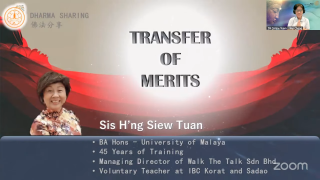
Than Hsiang's Pu Men Pin Online Gong Xiu Dharma Sharing (13/02/2026)
Voluntary Teacher at IBC, Sis H’ng Siew Tuan sharing " Transference of Merits "
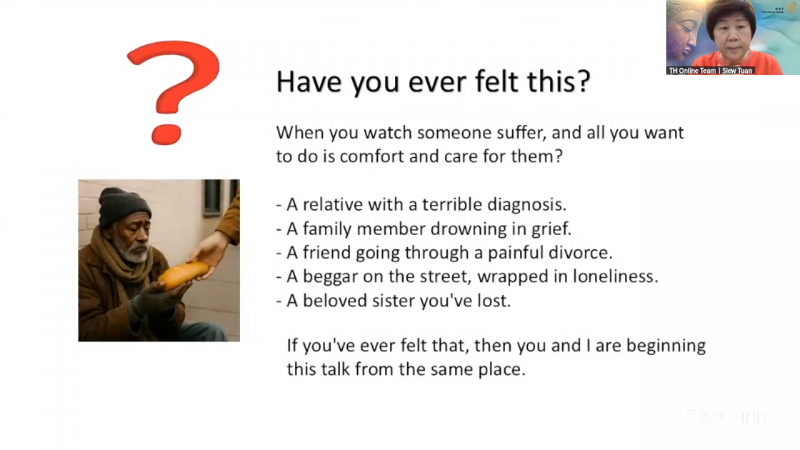
Have you ever felt this?
When you watch someone suffer, and all you want to do is comfort and care for them?
- A relative with a terrible diagnosis.
- A family member drowning in grief.
- A friend going through a painful divorce.
- A beggar on the street, wrapped in loneliness.
- A beloved sister you've lost.
If you've ever felt that, then you and I are beginning this talk from the same place.
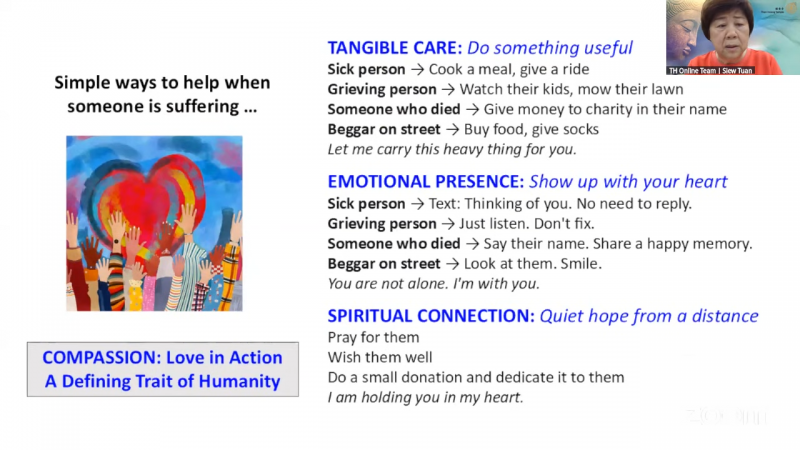
COMPASSION: Love in Action
( A Defining Trait of Humanity )
Simple ways to help when someone is suffering:-
(1) TANGIBLE CARE: Do something useful
Sick person → Cook a meal, give a ride
Grieving person → Watch their kids, mow their lawn
Someone who died → Give money to charity in their name
Beggar on street → Buy food, give socks
“ Let me carry this heavy thing for you.”
(2) EMOTIONAL PRESENCE: Show up with your heart
Sick person → Text: Thinking of you. No need to reply.
Grieving person → Just listen. Don't fix.
Someone who died → Say their name. Share a happy memory.
Beggar on street → Look at them. Smile.
“You are not alone. I'm with you.”
(3) SPIRITUAL CONNECTION: Quiet hope from a distance
Pray for them
Wish them well
Do a small donation and dedicate it to them
“I am holding you in my heart.”
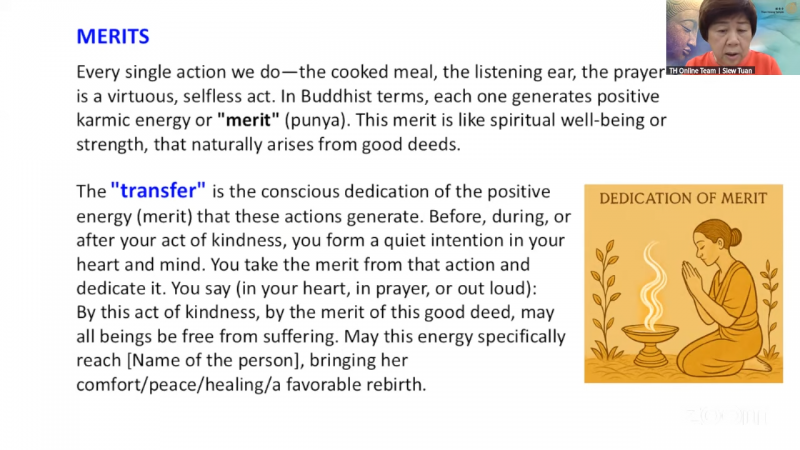
MERITS
Every single action we do—the cooked meal, the listening ear, the prayer- is a virtuous, selfless act. In Buddhist terms, each one generates positive karmic energy or "merit" (punya). This merit is like spiritual well-being or strength, that naturally arises from good deeds.
The "transfer" is the conscious dedication of the positive energy (merit) that these actions generate. Before, during, or after your act of kindness, you form a quiet intention in your heart and mind. You take the merit from that action and dedicate it. You say (in your heart, in prayer, or out loud): “ By this act of kindness, by the merit of this good deed, may all beings be free from suffering. May this energy specifically reach [Name of the person], bringing her comfort/peace/healing/a favorable rebirth. ”
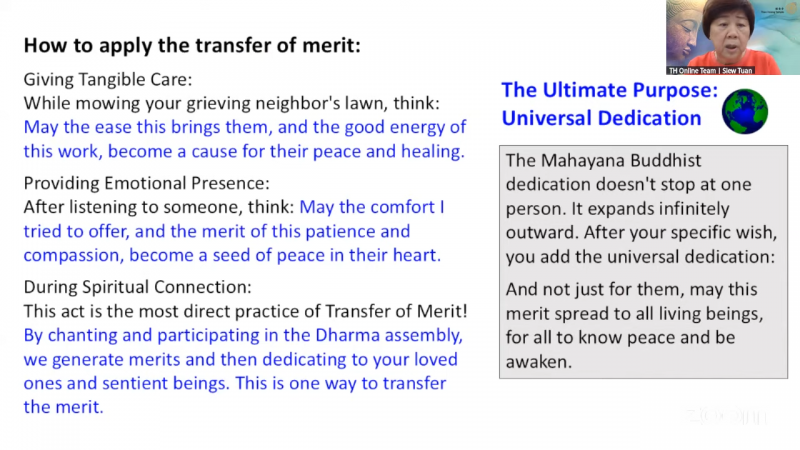
How to apply the transfer of merit:-
(1) Giving Tangible Care:
While mowing your grieving neighbor's lawn, think: May the ease this brings them, and the good energy of this work, become a cause for their peace and healing.
(2) Providing Emotional Presence:
After listening to someone, think: May the comfort I tried to offer, and the merit of this patience and compassion, become a seed of peace in their heart.
(3) During Spiritual Connection:
This act is the most direct practice of Transfer of Merit! By chanting and participating in the Dharma assembly, we generate merits and then dedicating to your loved ones and sentient beings. This is one way to transfer the merit.
The Ultimate Purpose: Universal Dedication
The Mahayana Buddhist dedication doesn't stop at one person. It expands infinitely outward. After your specific wish, you add the universal dedication:
And not just for them, may this merit spread to all living beings, for all to know peace and be awaken.
Why do this – transference of merits?
(1) It prevents selfishness:
It ensures you don't subconsciously do good deeds just to feel like a "good person" or to get credit. It turns the action outward.
(2) It multiplies the merit:
Buddhist philosophy holds that an act of kindness dedicated to the benefit of all beings generates vastly more merit than one done for oneself.
(3) It creates a habit of boundless compassion:
It trains your mind to connect every single good act to the ultimate well-being of the whole world.
Some May Ask:-
Is this idea of ‘transferring merits’ just a metaphor? A psychological tool? Or is it something that wisdom traditions around the world have recognized and practiced for centuries?
Transference of merits is deeply embedded in some of the world’s ancient contemplative paths.
Though their languages and methods differ, traditions like Mahayana Buddhism, Tibetan Buddhism, and Theravada Buddhism, each offer profound insights into how merits - the energy of good actions - can be shared.
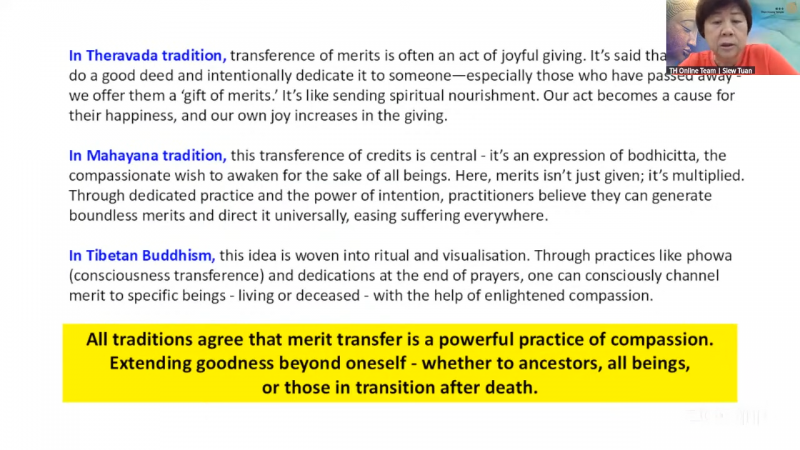
In Theravada tradition, transference of merits is often an act of joyful giving. It’s said that when we do a good deed and intentionally dedicate it to someone—especially those who have passed away - we offer them a ‘gift of merits.’ It’s like sending spiritual nourishment. Our act becomes a cause for their happiness, and our own joy increases in the giving.
In Mahayana tradition, this transference of credits is central - it’s an expression of bodhicitta, the compassionate wish to awaken for the sake of all beings. Here, merits isn’t just given; it’s multiplied. Through dedicated practice and the power of intention, practitioners believe they can generate boundless merits and direct it universally, easing suffering everywhere.
In Tibetan Buddhism, this idea is woven into ritual and visualisation. Through practices like phowa (consciousness transference) and dedications at the end of prayers, one can consciously channel merit to specific beings - living or deceased - with the help of enlightened compassion.
All traditions agree that merit transfer is a powerful practice of compassion.
Extending goodness beyond oneself - whether to ancestors, all beings, or those in transition after death.
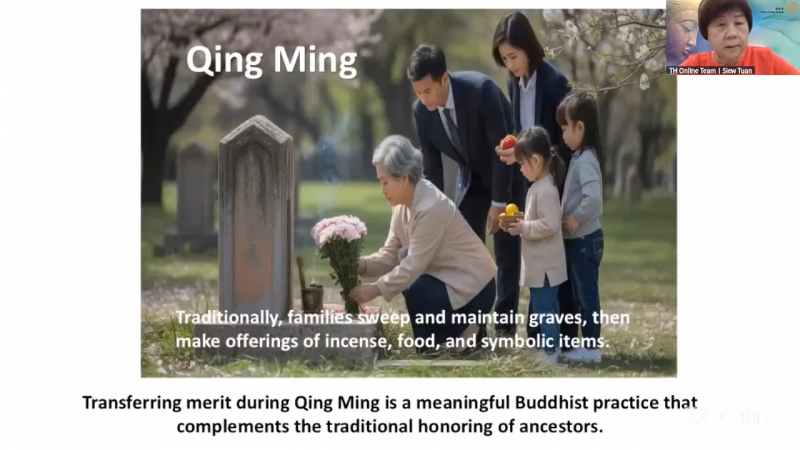
Transferring merit during Qing Ming is a meaningful Buddhist practice that complements the traditional honoring of ancestors.
( Traditionally, families sweep and maintain graves, then make offerings of incense, food, and symbolic items.)
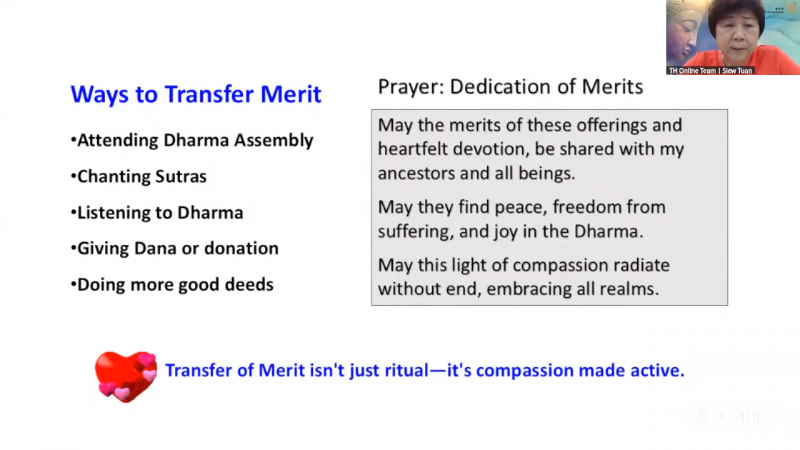
Ways to Transfer Merit
• Attending Dharma Assembly
• Chanting Sutras
• Listening to Dharma
• Giving Dana or donation
• Doing more good deeds
Prayer: Dedication of Merits
May the merits of these offerings and heartfelt devotion, be shared with my ancestors and all beings.
May they find peace, freedom from suffering, and joy in the Dharma.
May this light of compassion radiate without end, embracing all realms.
Transfer of Merit isn't just ritual—it's compassion made active.
Let's take one quiet moment together.
(1) Bring to mind someone you wish to send merits to and simply hold all beings in your heart.
(2) Shall we all say together: “ May the merits of our gathering today benefit our parents, teachers, siblings, ancestors, all in need, and every living being. May all find happiness and peace.”
For more information, please browse https://youtu.be/dfI3dp4hQbQ
Spread the Buddha's teachings to guide more people to study Buddhism.
Continue diligently in the path studying the Buddha's teachings and listening to the Dharma.
Follow us on:
https://linktr.ee/thanhsiang