Submitted by KhawLingLing on
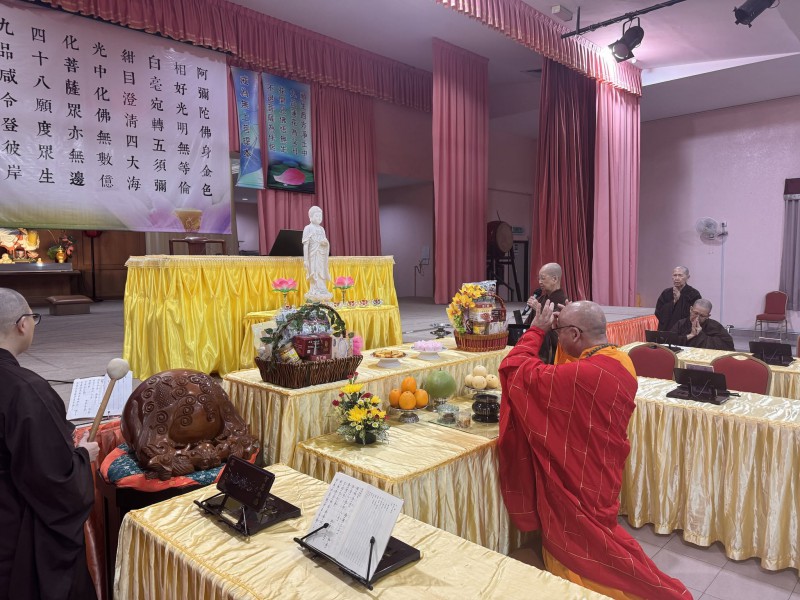
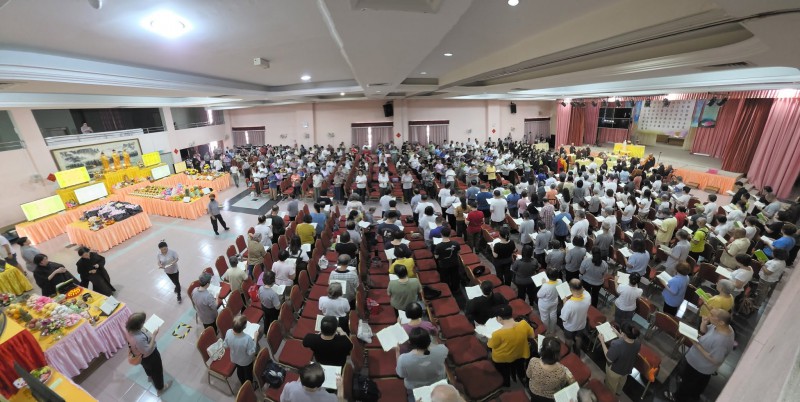
To commemorate ancestors, show gratitude for parents' kindness, pray for the health and peace of living parents, and wish for the deceased to be free from suffering and attain happiness, Than Hsiang Temple organized a seven-day Filial Piety Dharma Assembly from the 19th to the 25th day of the seventh lunar month. During the assembly, devotees actively participated with sincere devotion to pay homage to the Buddha, recite sutras, listen to teachings, and dedicate merits to repay parental kindness through the Buddha's blessings.
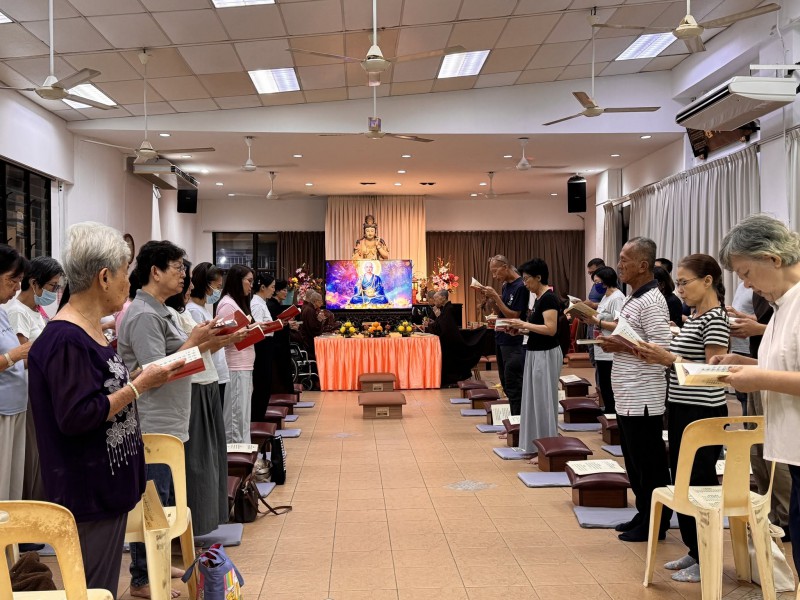
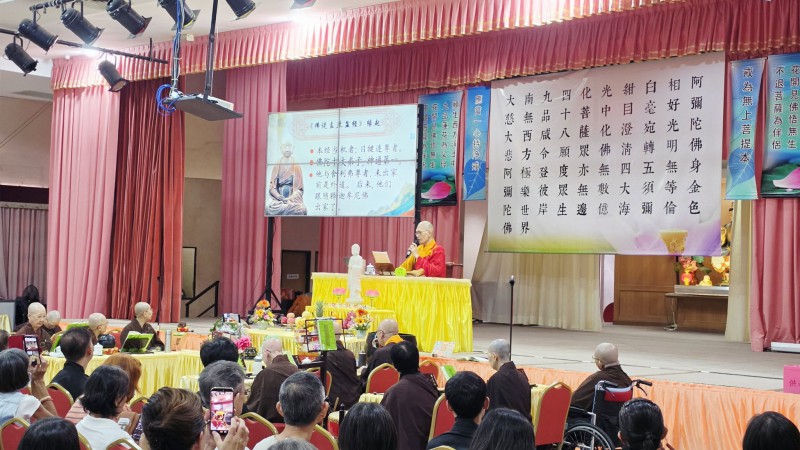
The assembly commenced on August 31 (19th day of the seventh lunar month) at 7:30 PM with a Purification Ceremony. At 8:00 PM, attendees gathered in the 5th-floor auditorium to recite the Amitabha Sutra and listen to Venerable Zhen Sheng, Abbot of Than Hsiang Temple, gave a Dharma talk on the Amitabha Sutra.
The Amitabha Sutra is a crucial scripture delivered by the Buddha unasked. The Buddha proactively taught it to point out a simple and universally feasible path to rebirth in the Pure Land. The most direct method is: "upon hearing of Amitabha Buddha, hold fast to His name." The focus lies not in complex forms of practice, but in continuously integrating "Amitabha Buddha" into daily life with dedicated and sustained mindfulness, without losing confidence due to an inability to reach high states of meditative concentration. The power of "faith, vow, and mindfulness" stems precisely from the attraction and reception of Amitabha Buddha's grand vows and achievements.
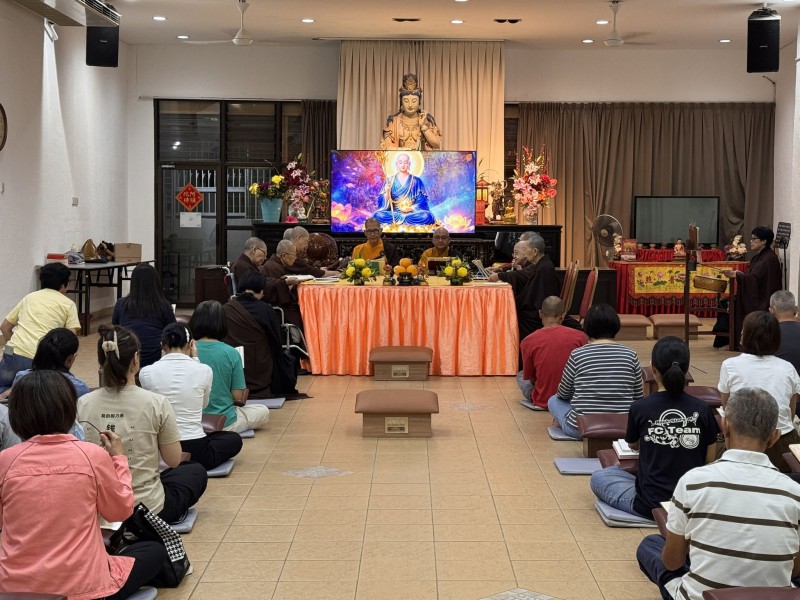
From September 1 to 2 (20th to 21st days of the seventh lunar month), daily merit dedications for the Longevity and Pure Land Altars took place at 11:00 AM in the 5th-floor auditorium to pray for the living and the deceased. Every evening at 8:00 PM, Amitabha Sutra group cultivations and Dharma talks were held in the Great Compassion Hall.
From September 3 to 5 (22nd to 24th days of the seventh lunar month), the morning merit dedications continued at 11:00 AM. Evening sessions at 8:00 PM shifted to the cultivation of the Ksitigarbha Sutra. Embodying Ksitigarbha Bodhisattva's grand vow, the assembly sought to liberate past ancestors and karmic creditors, praying for all beings in the Dharma realm to attain peace and happiness. During this period, Venerable Zhen Sheng delivered talks on the Verse of Bodhisattva Juelin and the Upper and Middle Scrolls of the Ksitigarbha Sutra.
The Verse of Bodhisattva Juelin originates from Chapter 19 ("Yama Heaven") of the Avatamsaka Sutra, functioning as Bodhisattva Juelin's verse in praise of the Buddha. Often printed at the beginning of the Ksitigarbha Sutra, it is known as the "Hells-Breaking Verse," centering on the truth that "everything is created by the mind alone." The verse states: "The mind is like a master painter, able to paint all worlds; the five aggregates all arise from it, and there is no phenomenon it does not create." Our mind is the painter: virtuous thoughts paint heaven, while evil thoughts paint hell. All realms are creations of our consciousness. As the mind creates all things, external appearances are illusory, whereas our true nature is uncreated and imperishable. As the Diamond Sutra teaches, "all appearances are illusory"; external forms constantly change, yet our true nature remains unchanged. Likewise, the Platform Sutra states: "How wondrous that self-nature is intrinsically pure, unborn and undying, inherently complete, immovable, and capable of manifesting all phenomena!"
Ignorance and enlightenment rest entirely in a single thought. When deluded, the mind is obscured by the five aggregates and the three poisons (greed, anger, delusion). We cannot change external environments, but we can change our state of mind. Learning to shift our mindset frees us from illusory thoughts. Once the mind becomes serene, everything changes. "Breaking hell" essentially means shattering the hell within our minds. We cannot change the weather, but we can change our state of mind; we cannot control others, but we can always master our own minds!
The Ksitigarbha Sutra is a scripture on filial piety delivered by the Buddha in Trayastrimsa Heaven for his mother, Queen Maya. It records Ksitigarbha Bodhisattva's grand vow: "Not until the hells are empty will I become a Buddha." The four chapters in the Upper Scroll serve as the starting point for understanding the text, emphasizing filial piety and repaying the four great debts of gratitude: to parents, sentient beings, country, and the Triple Gem. Practice begins with treating parents and family well. We must ask ourselves whether we care for the two living Buddhas (our parents) at home. Practice must begin with kindness and offerings to one's parents. The sutra teaches us how to change our destiny through deep faith in cause and effect, abandoning evil, and cultivating good.
The Middle Scroll illustrates the karmic retribution of hells and outlines how to achieve liberation through Buddha-mindfulness and generosity. Hells are not pre-existing places waiting to trap us; they are generated entirely by our own karma. Cause and effect operates strictly on "reaping what one sows." Hence, one must think carefully before acting and consider karma in every thought. The Buddha advises that praising, making offerings to Ksitigarbha Bodhisattva, and reciting this sutra yields inconceivable merit. Reciting sutras and performing wholesome deeds for the deceased within the 49 days following death frees them from suffering and brings blessings to the living. Mindfully chanting the Buddha's name eradicates heavy sins and leads to liberation. Practice must be applied to daily life—even a single kind word or sympathetic praise accumulates wholesome causes.
Venerable Zhen Ru elaborated on Venerable Yin Shun's 1963 lecture notes, The Supreme Virtues and Dharma Gate of Ksitigarbha Bodhisattva, explaining how Ksitigarbha Bodhisattva saves sentient beings from creating karmic causes that lead to hell and rescues those on the verge of, or already in, hell. A person facing downfall due to past evil karma can avoid falling by giving away cherished possessions to create blessings before death. Taking refuge in the Triple Gem, performing virtuous deeds, cultivating merit and wisdom, repenting, and chanting the Buddha's name allows them to benefit from the Triple Gem's blessings. Performing virtuous deeds and reciting sutras within 49 days after death keeps the deceased away from the three evil paths. The reciter receives six-sevenths of the merit, while the deceased receives one-seventh. Thus, we should cultivate merit ourselves while alive rather than waiting for others to do so after our death.
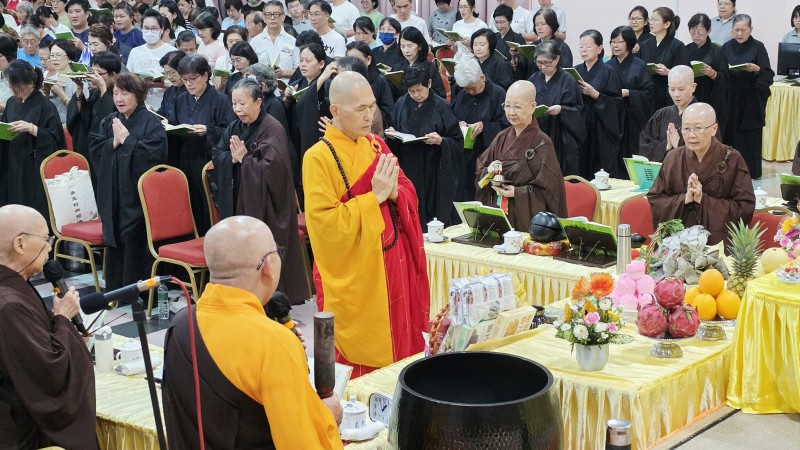
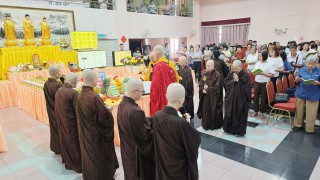
September 6 (25th day of the seventh lunar month) marked the highlight of the assembly. The auspicious Three-Time Contemplation Ritual took place in the 5th-floor auditorium at 1:00 PM and 4:00 PM. The assembly was also broadcast live on YouTube. Technical staff and volunteers from the Than Hsiang IT department managed operations to ensure a smooth stream, enabling remote devotees to join in the practice and share in the Dharma joy.
Following the Praise for Sending Off the Saints, the main screen displayed lotus flowers slowly flying into the palm of Amitabha Buddha, symbolizing that sentient beings across the six realms are liberated and reborn in the Western Pure Land.
The seven-day assembly concluded harmoniously amidst solemn Buddha chanting. May the merits of this assembly be dedicated to:
Living Parents: May they enjoy physical and mental well-being, with growing blessings and wisdom.
Past Ancestors: May they be free from suffering, attain bliss, and achieve early rebirth in the Pure Land.
All Beings in the Dharma Realm: May all share in the Dharma benefits and together attain Buddhahood.
******************************************************
More photos: https://thanhsiang.org/ch/node/7126
******************************************************
Spread the Buddha's teachings to guide more people to study Buddhism.
Continue diligently in the path studying the Buddha's teachings and listening to the Dharma.
Follow us on:
https://linktr.ee/thanhsiang